How luggage wheels are manufactured directly influences how a suitcase performs during everyday travel. Smooth rolling, low noise, durability, and impact resistance all depend on the manufacturing process rather than the appearance of the wheel alone. A complete luggage wheel system combines plastic components, bearings, wheel materials, metal axles, and precision assembly to deliver reliable performance over years of use.
For luggage brands and OEM buyers, understanding how luggage wheels are manufactured provides a better basis for evaluating suppliers. Material selection, production accuracy, and quality inspection all affect the final quality of a wheel system.
Why Wheel Manufacturing Matters
Luggage wheels experience continuous movement throughout a suitcase’s service life. Unlike decorative parts, they must withstand rolling friction, repeated impacts, changing loads, and different road conditions.
Airport terminals provide smooth flooring, but luggage also travels across sidewalks, escalators, train stations, hotels, and uneven pavement. Every surface creates different forces on the wheel system.
A well-designed wheel should continue rolling smoothly after thousands of kilometers without excessive noise, deformation, or bearing failure. This is why how luggage wheels are manufactured matters to both manufacturers and sourcing teams.
Choosing the Right Materials
Every luggage wheel starts with carefully selected materials.
The outer wheel is commonly produced from TPE (Thermoplastic Elastomer) or PU (Polyurethane), depending on the desired balance between durability, rolling comfort, and noise reduction.
The wheel housing is typically molded from high-strength engineering plastics such as PP, PA, or reinforced nylon, which provide sufficient rigidity while keeping the overall weight low.
Steel axles and precision bearings complete the structure, allowing the wheel to rotate smoothly under load.
Different suitcase categories often require different material combinations. Cabin luggage, large checked suitcases, and premium travel cases each have their own performance requirements.
Injection Molding of Wheel Components
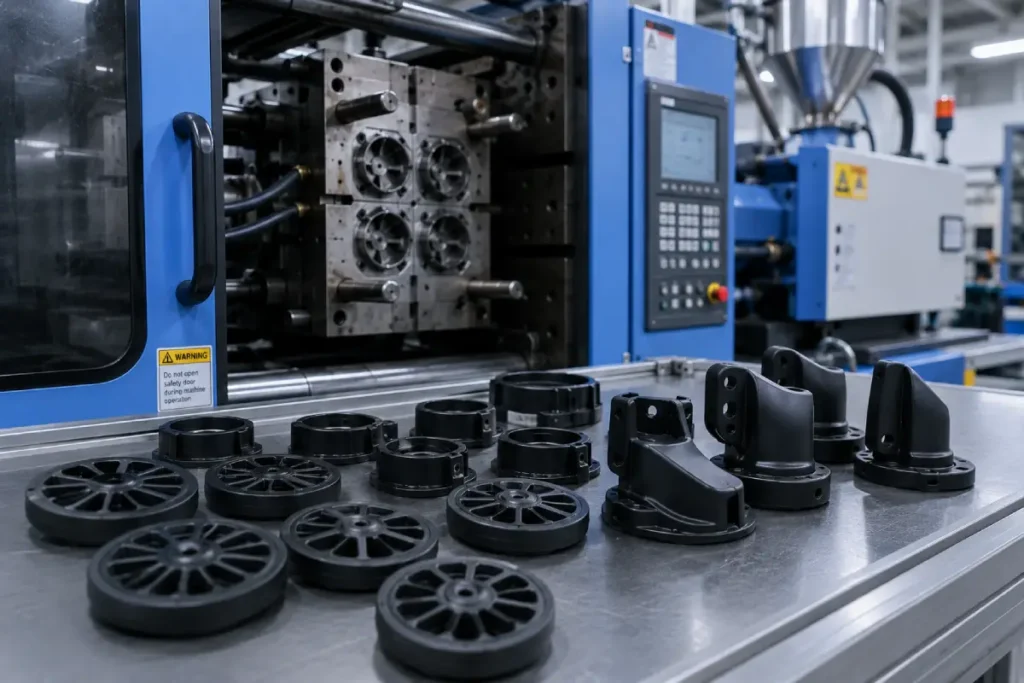
One of the most important stages in how luggage wheels are manufactured is plastic injection molding.
Manufacturers first produce the wheel housing, bearing seats, mounting brackets, and other structural components using precision molds.
Stable molding temperatures, injection pressure, and cooling time help maintain consistent dimensions across large production batches.
Dimensional accuracy is especially important because even slight variations can affect bearing installation and wheel alignment during assembly.
After molding, each component is inspected before moving to the next production stage.
Producing the Wheel
The rolling surface is manufactured separately from the housing.
Depending on the product specification, manufacturers mold TPE or polyurethane around the wheel core to create a wear-resistant outer layer.
This material directly influences:
- Rolling noise
- Wear resistance
- Floor protection
- Shock absorption
- Rolling comfort
Premium luggage often uses softer wheel materials to reduce vibration and improve the overall travel experience, while commercial luggage may prioritize durability over softness.
Bearing and Axle Assembly
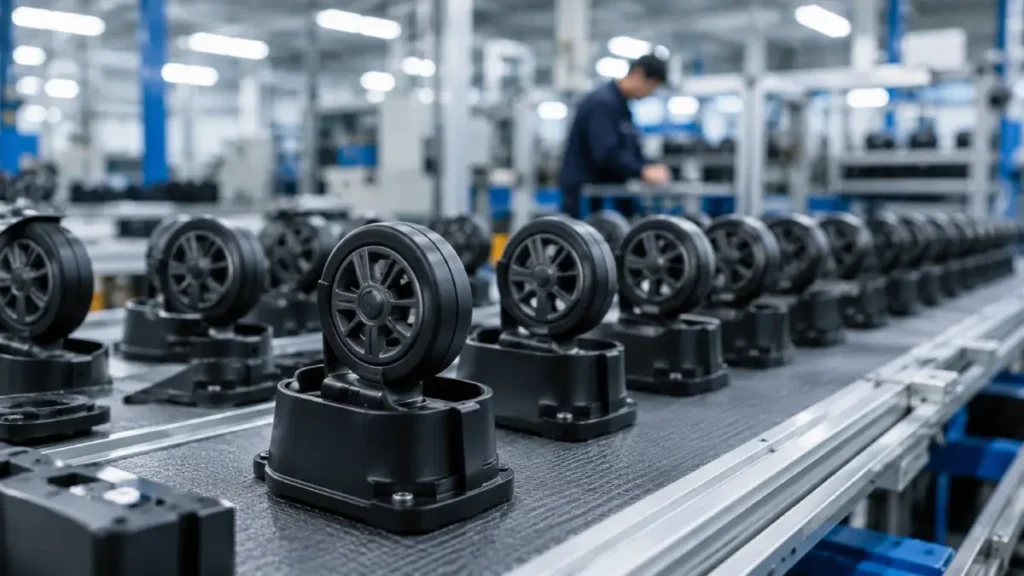
Once individual components are completed, technicians begin assembling the wheel system.
The process usually includes:
- Installing precision bearings
- Press-fitting the wheel core
- Mounting steel axles
- Installing washers and spacers
- Securing the wheel housing
Proper bearing alignment is essential.
If the bearing seat is oversized or the axle installation is inaccurate, the wheel may wobble, generate noise, or wear unevenly after prolonged use.
For this reason, many manufacturers use dedicated assembly fixtures to maintain consistent installation accuracy.
Performance Testing
Quality inspection is the final step in how luggage wheels are manufactured.
Manufacturers typically evaluate several aspects before shipment:
- Rolling smoothness
- Bearing rotation
- Wheel alignment
- Static load capacity
- Rolling endurance
- Noise level
- Impact resistance
Some OEM factories also conduct long-distance rolling simulations to replicate years of travel in a controlled testing environment.
Since wheels are among the highest-wear components of a suitcase, durability testing plays an important role in supplier qualification.
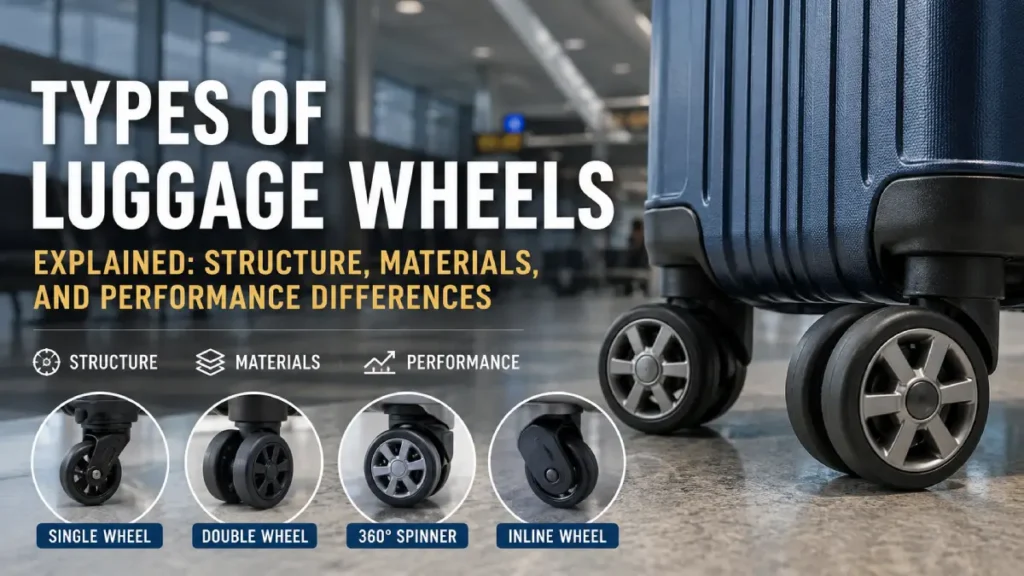
If you’re comparing different wheel structures before selecting a supplier, our article Types of Luggage Wheels Explained provides a detailed overview of single wheels, double-spinner wheels, materials, and their performance differences in modern luggage design.
OEM Manufacturing for Different Luggage Designs
Although wheel systems share similar engineering principles, OEM projects often require customized specifications.
Common customization includes:
- Wheel diameter
- Single-wheel or double-wheel design
- Housing dimensions
- Mounting hole locations
- Bearing specifications
- Wheel color and finish
Manufacturers work closely with luggage brands to ensure each wheel system matches the suitcase structure, expected load capacity, and target market.
Many buyers choose an experienced OEM luggage wheels manufacturer that can support custom development while maintaining consistent production quality.
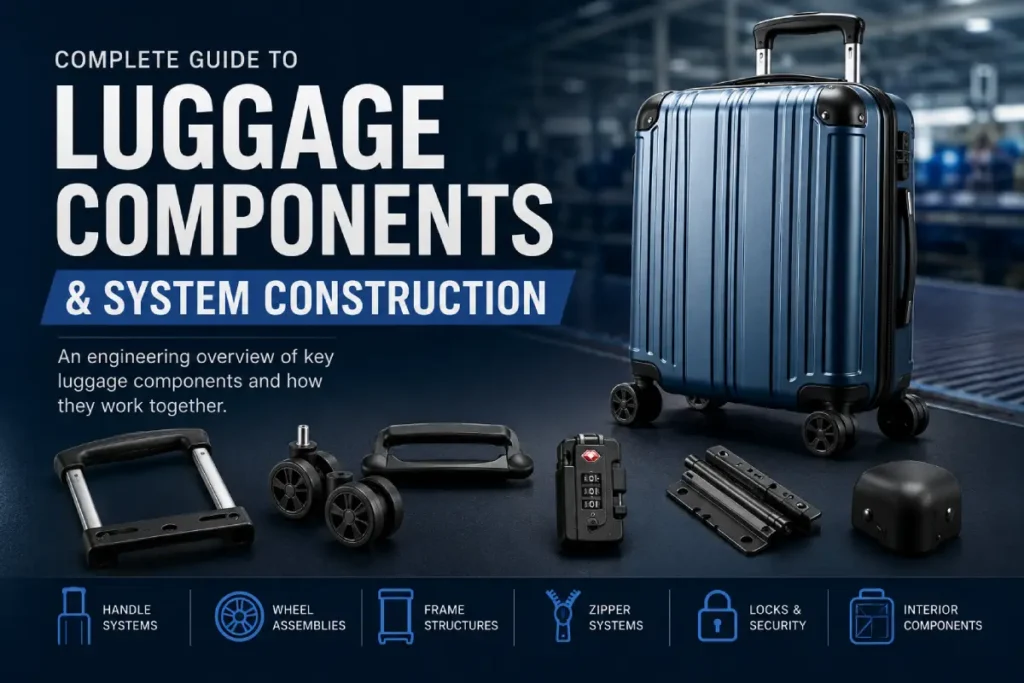
Readers interested in the overall suitcase production process can also explore our guide on how luggage is manufactured, while our Complete Guide to Luggage Components explains how wheel systems work together with telescopic handles, locks, and other structural components.
Understanding how luggage wheels are manufactured shows that wheel quality depends on far more than appearance. Material selection, precision molding, bearing installation, assembly accuracy, and durability testing all contribute to long-term performance.
For luggage brands and OEM buyers, evaluating wheel suppliers should focus on manufacturing capability rather than specifications alone. A reliable production process helps ensure smoother rolling, lower maintenance, and more consistent product quality across every production batch.