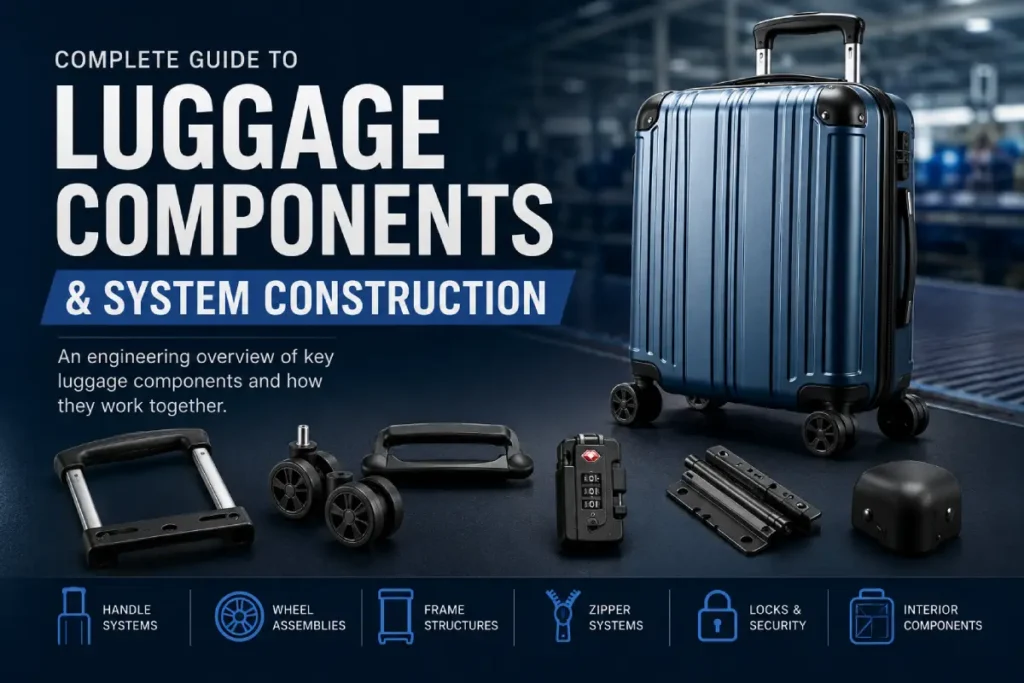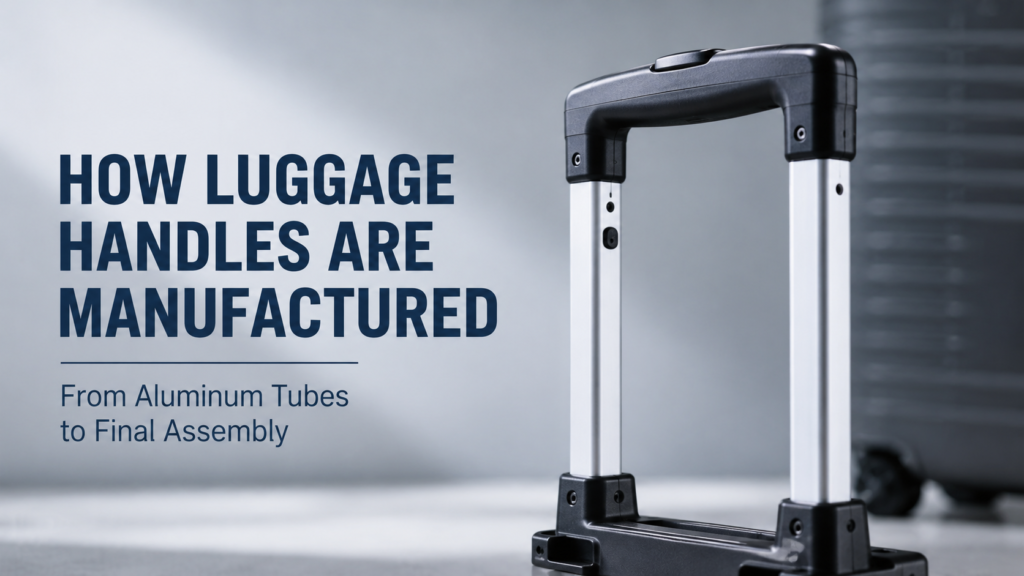
The types of luggage wheels play a major role in the usability and durability of modern luggage. In many cases, a suitcase shell remains intact for years while wheel assemblies become the first component requiring repair or replacement.
For luggage manufacturers, wheel selection affects rolling stability, noise levels, load distribution, and long-term product reliability. For importers and sourcing teams, understanding wheel construction helps when comparing suppliers, evaluating prototypes, and reviewing OEM product specifications.
Although wheel systems may appear simple from the outside, most modern luggage wheels combine multiple materials and mechanical components designed to withstand continuous movement under load.
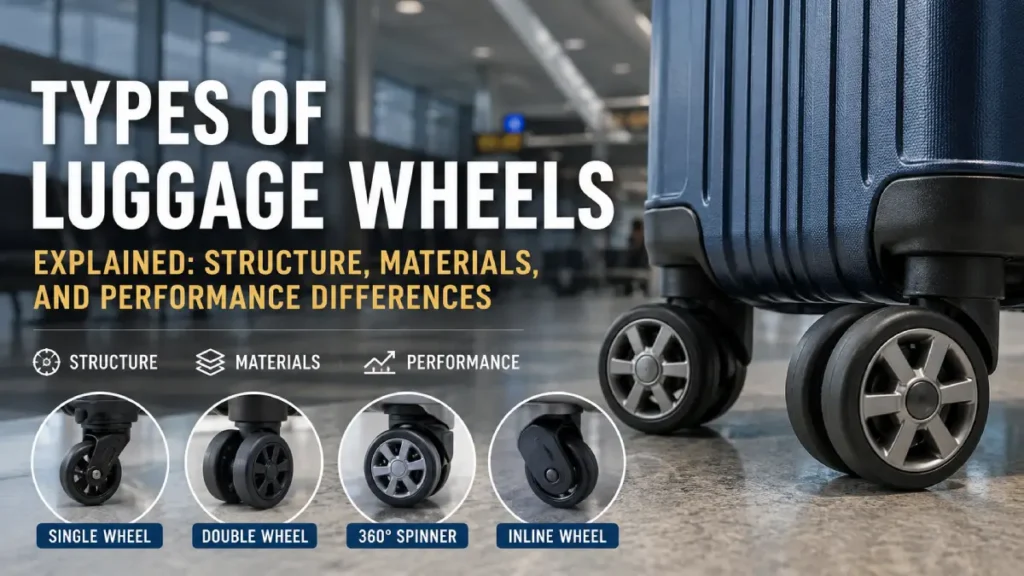
Types of Luggage Wheels: Single-Wheel and Double-Wheel Designs
The most common wheel configurations used in luggage manufacturing are single-wheel and double-wheel systems.
Single-wheel structures use one wheel on each corner of the suitcase. This design reduces component cost and overall product weight while maintaining adequate performance for lightweight luggage categories.
Double-wheel systems use two wheels mounted side by side within each housing assembly.
Manufacturers often prefer double-wheel configurations for larger luggage because load distribution improves during movement. The larger contact area also helps maintain stability when the suitcase changes direction or rolls across uneven flooring surfaces.
Premium luggage collections frequently use double-wheel structures because users generally perceive smoother movement and improved maneuverability.
Spinner Wheels vs Inline Wheels
Wheel orientation significantly affects luggage handling characteristics.
Spinner wheels rotate 360 degrees, allowing movement in multiple directions without tilting the suitcase. Most modern hard-shell luggage uses spinner systems because they improve maneuverability in airports, train stations, and urban travel environments.
Inline wheels operate along a fixed direction and require users to tilt the suitcase before pulling it.
Although inline wheel systems provide less directional flexibility, they often offer stronger structural support because the wheel assembly experiences force from fewer movement angles.
Manufacturers continue to use inline configurations in certain luggage categories where durability receives higher priority than maneuverability.
Wheel Materials Used in Luggage Manufacturing
Wheel material selection influences rolling comfort, wear resistance, and noise generation.
Most luggage wheels use one of the following materials:
- polypropylene
- PVC
- thermoplastic rubber
- polyurethane
Polyurethane remains common in mid-range and premium luggage because it provides a balance between durability and rolling smoothness.
Harder wheel materials typically resist wear more effectively but may generate additional vibration and noise during operation.
Factories often evaluate wheel compounds under continuous rolling tests before approving mass production.
Material selection becomes increasingly important for luggage intended for frequent travel or commercial use. Different types of luggage wheels often use different material combinations depending on product positioning, target market, and expected travel frequency.
Anatomy of a Luggage Wheel Assembly
A luggage wheel assembly includes far more than the wheel itself.
Most systems contain:
- wheel housing
- wheel core
- axle
- bearings
- mounting bracket
- reinforcement structure
The wheel housing connects directly to the suitcase shell and absorbs a large percentage of the forces generated during movement.
Manufacturers pay particular attention to housing strength because failures often occur around mounting locations rather than the wheel surface itself.
Many wheel-related warranty claims originate from cracked housings, loose mounting structures, or damaged reinforcement plates.
Wheel Systems and Component Integration
Wheel performance depends heavily on how the assembly interacts with other luggage components.
A wheel system may perform well in isolation yet experience premature failure when paired with weak reinforcement structures or poorly aligned mounting points.
During product development, manufacturers often evaluate wheel systems together with luggage handle systems because both components influence user movement and load transfer throughout the suitcase.
Compatibility between wheels, shell structures, reinforcement plates, and handle assemblies becomes increasingly important in larger luggage collections where total carrying loads are significantly higher.
For this reason, many factories review wheel performance alongside other luggage components during prototype validation rather than treating each component in isolation. [Complete Guide to Luggage Components]
When comparing different types of luggage wheels, manufacturers typically evaluate not only wheel performance but also compatibility with shell reinforcement structures, handle assemblies, and overall luggage design requirements.
Durability Testing for Luggage Wheels
Most luggage factories conduct durability testing before approving wheel assemblies for mass production.
Common procedures include:
Rolling Fatigue Testing
The suitcase rolls continuously under load to simulate extended travel conditions.
Obstacle Testing
Wheel systems pass over uneven surfaces to evaluate structural stability and wear characteristics.
Impact Testing
Manufacturers evaluate wheel resistance to sudden shocks and drops during handling.
Load Testing
Additional weight is applied to determine whether wheel assemblies maintain structural integrity under stress.
Testing results often influence supplier selection decisions, particularly for OEM projects targeting premium retail markets.
Common Wheel Failures
Wheel failures generally occur in predictable locations.
Manufacturers frequently encounter:
- cracked wheel housings
- bearing wear
- axle deformation
- loose mounting hardware
- uneven wheel wear
The root cause often relates to reinforcement design, assembly tolerances, or material selection rather than the wheel surface itself.
Understanding these failure mechanisms helps sourcing teams evaluate supplier capabilities more effectively during product development.
Relationship Between Wheel Systems and Manufacturing Quality
Wheel performance depends on manufacturing consistency as much as wheel design.
Improper drilling positions, weak reinforcement structures, or dimensional variation during assembly can create alignment issues that reduce rolling performance.
Factories producing high-volume OEM luggage generally implement additional inspection procedures around wheel installation because small dimensional deviations become more noticeable after prolonged use.
Readers interested in the broader production process can refer to our guide on how luggage is manufactured, which explains how wheel systems fit into overall suitcase assembly operations.
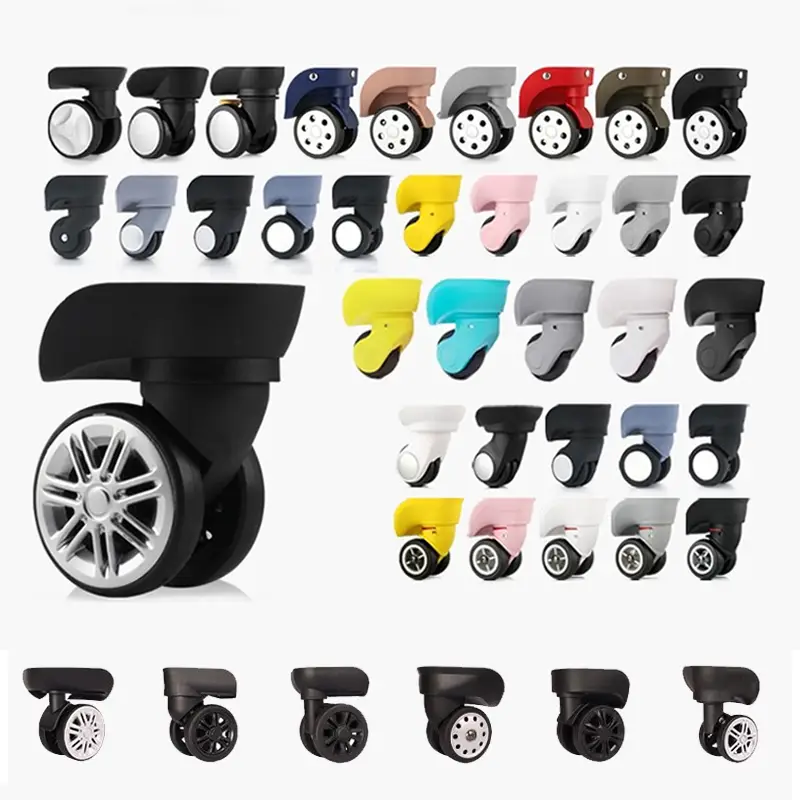
The various types of luggage wheels used in modern suitcase production differ in structure, material composition, load distribution, and durability characteristics. Selecting the appropriate types of luggage wheels depends on product positioning, expected load conditions, manufacturing requirements, and long-term performance objectives.
Single-wheel, double-wheel, spinner, and inline systems each serve different product requirements and market segments. For luggage brands, importers, and sourcing teams, evaluating wheel assemblies as complete mechanical systems rather than isolated components provides a more accurate understanding of long-term product performance.
More reading recommendations: ABS vs. PC vs Aluminum Luggage: Material Selection in Modern Suitcase Manufacturing