
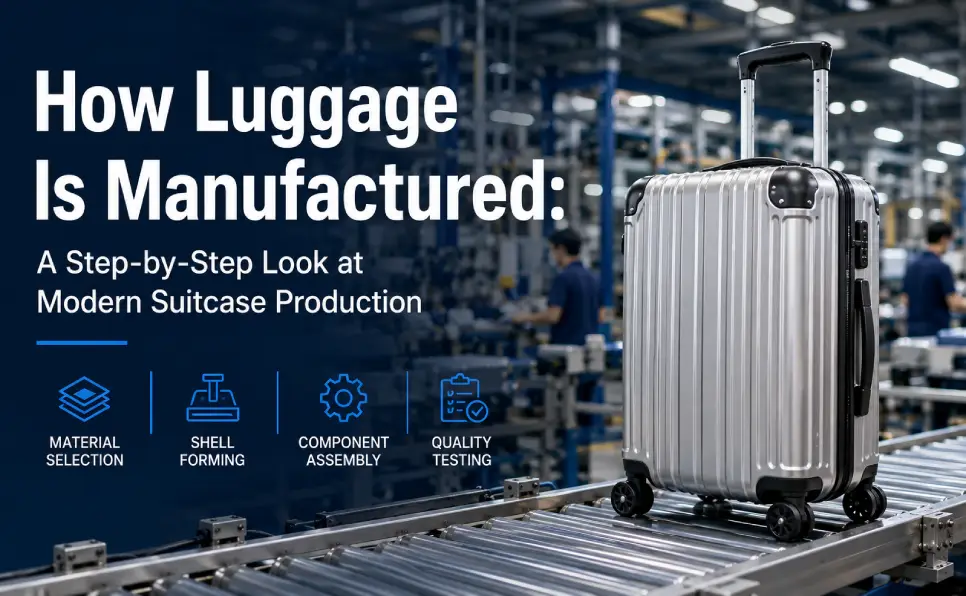
How luggage is manufactured varies with product positioning, material selection, and factory capabilities, but most hard-shell suitcase production follows a similar industrial process that combines thermoforming, component assembly, metal fabrication, sewing, and durability testing.
For importers and luggage brands, understanding how suitcases are made is useful when evaluating suppliers, comparing product quality, or developing new luggage collections. Material choice alone does not determine whether a suitcase performs well in actual travel conditions. Structural design, wheel mounting methods, handle construction, and assembly consistency often have a greater influence on long-term durability.
This article explains the standard luggage manufacturing process used in many luggage factories, from shell forming to final inspection.
Material Preparation Before Production
Most hard-shell luggage factories work with ABS, polycarbonate (PC), polypropylene (PP), or aluminum materials. Each material requires different forming temperatures, tooling conditions, and processing methods. [ABS vs PC vs Aluminum Luggage: Material Selection in Modern Suitcase Manufacturing]
ABS remains common in entry-level and mid-range luggage because it is relatively economical and easy to thermoform. PC is widely used in higher-end collections where impact resistance and flexibility are required. Aluminum luggage follows a different production route and involves metal fabrication rather than plastic shell forming.
Before production starts, raw material sheets or pellets are inspected for thickness consistency, surface defects, and moisture content. In PC luggage manufacturing, especially, improper moisture control can create surface bubbles or stress marks during heating.
Factories producing OEM luggage usually prepare multiple shell sizes simultaneously because cabin luggage, medium cases, and large check-in luggage often share the same tooling structure with dimensional adjustments.
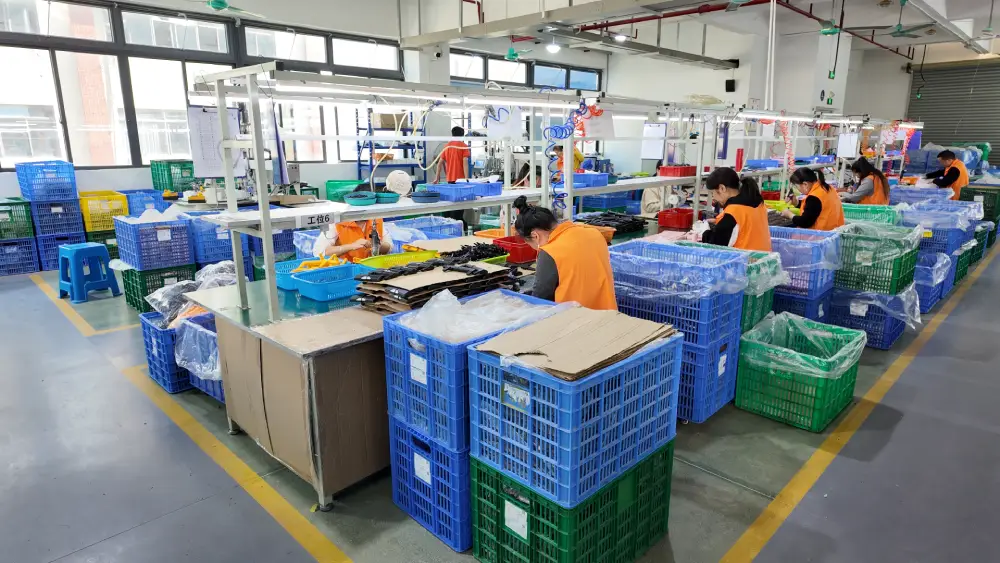
Shell Forming in the Luggage Manufacturing Process
One of the main stages in how luggage is manufactured is shell forming. For hard-shell suitcases, factories generally use vacuum forming, pressure forming, or injection molding systems.
In thermoforming production lines, plastic sheets are heated until they become flexible enough to conform to aluminum molds. The heated material is then shaped under vacuum pressure before cooling and trimming.
The luggage factory process at this stage directly affects shell rigidity and dimensional stability. Uneven heating can lead to shell deformation, weak corners, or inconsistent thickness around wheel mounting areas.
Polycarbonate shells usually require tighter temperature control than ABS because overheating may reduce impact resistance or create visible surface imperfections.
After forming, excess material is trimmed, and the shell edges are prepared for drilling, riveting, or zipper frame installation.
Luggage Components Manufacturing
One of the first stages in how luggage is manufactured is material selection, since shell materials directly affect strength, flexibility, and weight.
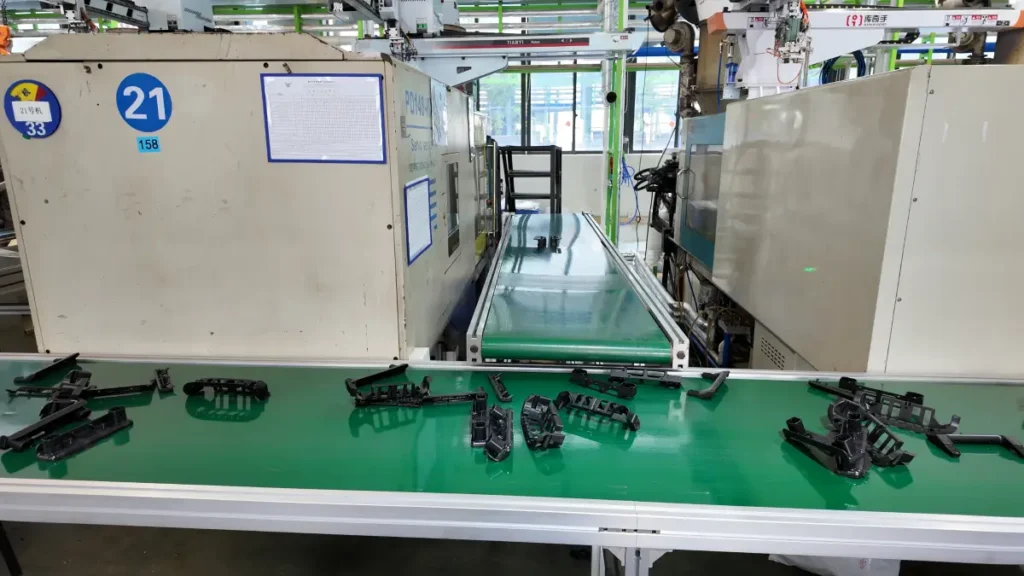
A large portion of the luggage production steps actually happens outside the shell production line. Components such as telescopic handles, wheel housings, corner guards, locks, and zipper systems are commonly manufactured separately before final assembly. [Complete Guide to Luggage Components]
This stage of luggage components manufacturing often involves several independent production methods:
- aluminum tube extrusion for telescopic handles
- plastic injection molding for wheel housings and handle grips
- die-casting for connector parts
- stamping and bending for metal support brackets
Handle systems usually go through repeated extension cycle testing before assembly because instability in the telescopic mechanism becomes one of the most common complaints in luggage products after extended use.
Wheel construction also varies significantly between factories. Some manufacturers use integrated wheel seats molded directly into the shell structure, while others rely on screw-mounted wheel assemblies with separate reinforcement plates. During how luggage is manufactured, handle and wheel installation must follow strict positioning standards to ensure smooth movement and structural stability.
For brands purchasing telescopic systems separately, partnering with an experienced luggage handle manufacturer can help improve fitment consistency, durability, and overall product performance over time and across different luggage collections.
Sewing and Interior Assembly
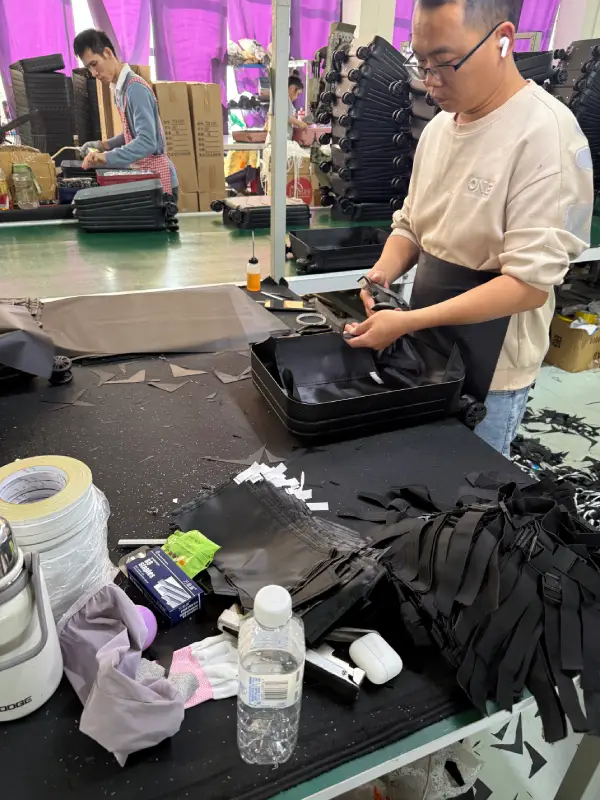
While hard-shell luggage receives most attention from a structural standpoint, interior assembly also affects product quality and user experience.
Factories typically sew inner linings, divider panels, elastic straps, and zipper pockets before installation into the shell. Mid-range and premium luggage often includes reinforced stitching around stress points where compression loads frequently occur during travel.
Interior compartments are generally attached using rivets, adhesive systems, or concealed stitching structures, depending on the luggage design.
In soft-shell luggage production, sewing operations become much more important because the external structure itself depends heavily on fabric panel construction and reinforcement placement.
Final Assembly Line
Once shell parts and components are prepared, the suitcase moves to the final assembly stage.
The assembly sequence usually includes:
- wheel installation
- telescopic handle installation
- top and side handle mounting
- zipper or frame attachment
- lining installation
- lock fitting
- edge reinforcement
Factories producing large OEM luggage volumes often separate assembly lines by luggage size to improve workflow consistency and reduce handling errors.
Alignment accuracy becomes important during this process. Poor wheel positioning or uneven telescopic handle installation can create instability when the suitcase rolls under load.
In many luggage factories, workers manually inspect wheel smoothness and handle movement immediately after installation before the product proceeds to final inspection.
Quality Testing and Inspection
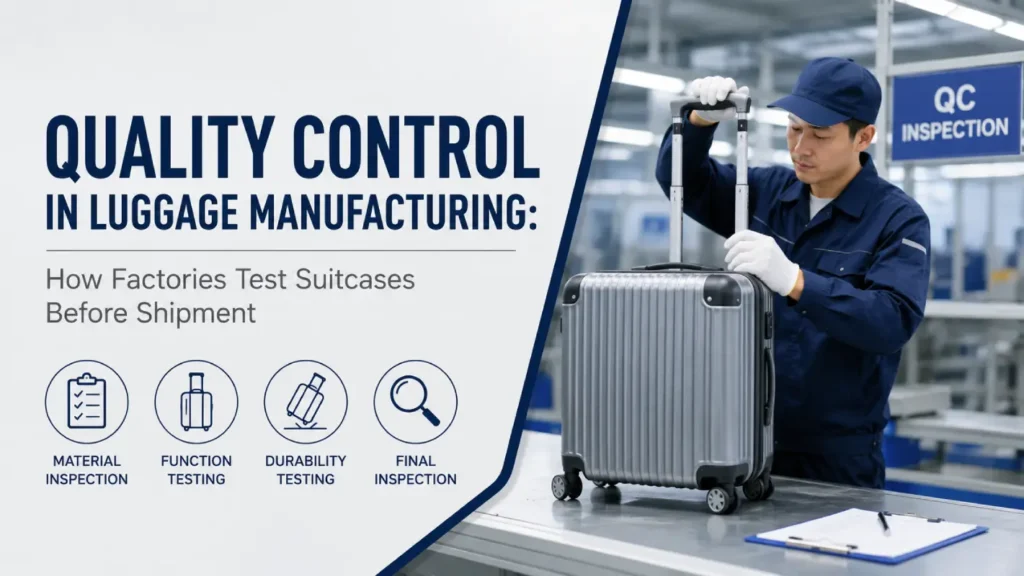
Quality testing is one of the most important stages in the luggage manufacturing process because many structural problems only appear after repeated movement, impact, or load stress.
Common testing procedures include:
Drop Testing
Simulates impact conditions during baggage handling and airport transportation.
Rolling Fatigue Testing
Measures wheel durability under continuous movement over extended distances.
Telescopic Handle Cycle Testing
Repeated extension and retraction testing is used to evaluate handle stability and locking reliability.
Load Testing
Checks whether wheel systems, handles, and shell structures can withstand specified weight conditions without deformation.
Factories supplying international luggage brands like Samsonite often follow internal durability standards that exceed basic retail requirements, especially for export markets where warranty claims can become expensive.
Packaging and Export Preparation
After inspection, luggage products are cleaned, surface-protected, and packed for shipment.
Most export packaging includes:
- protective poly bags
- foam protection around handles and wheels
- export cartons
- barcode and carton labeling
Factories shipping large OEM orders may also conduct container loading simulations to reduce transportation damage during international shipping.
For buyers importing luggage products from Asia, packaging quality matters more than many first-time importers expect. Weak cartons or insufficient wheel protection can easily create damage during ocean freight, even when the suitcase itself passes factory inspection.
Conclusion
Understanding how luggage is manufactured requires looking beyond the outer shell. Modern suitcase production combines thermoforming, metal fabrication, component assembly, sewing operations, and durability testing within a coordinated manufacturing system.
The overall quality of a suitcase depends not only on shell material but also on handle structure, wheel construction, assembly precision, and consistency across production batches.
For importers, distributors, and luggage brands, evaluating the full luggage factory process—including luggage components manufacturing and quality control procedures—usually provides a more accurate picture of supplier capability than material specifications alone.
Learning how luggage is manufactured gives buyers and brands a better understanding of product quality, structural design, and production standards. A reliable manufacturing process helps ensure better durability and long-term performance in real travel conditions
Continue Reading:
If you’d like to learn more about luggage design, the following article may also be useful:
Pingback: Complete Guide to Luggage Components & Systems
Pingback: Types of Luggage Wheels Explained | Structure & Performance
Pingback: Quality Control in Luggage Manufacturing Explained